
Volume perm hairstyles for thin and flat hair Key Takeaways
If you have been battling with hair that lies limp against your scalp no matter how much you tease or spray it, a modern volume perm hairstyles for thin and flat hair can be a genuine game-changer.
- Volume perm hairstyles for thin and flat hair use larger rods and lower heat to add body without damaging delicate strands.
- Choosing the right rod size and wrap pattern is critical for achieving natural-looking lift at the roots.
- A strategic aftercare routine with protein-free moisturizers and low-poo shampoos extends the life of your perm and prevents over-processing.
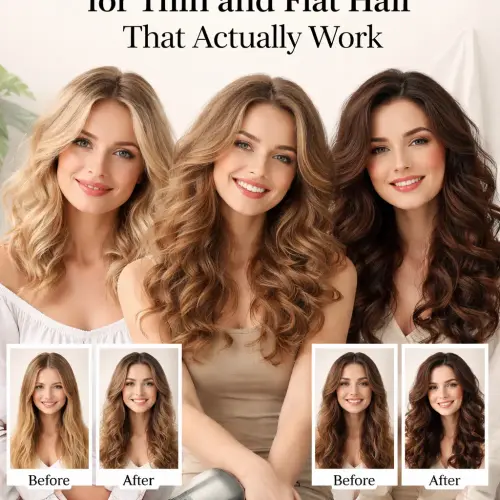
Why a Volume Perm is a Smart Solution for Thin and Flat Hair
Thin hair lacks the internal structure to hold volume naturally. Gravity, humidity, and even your pillow conspire to flatten it within hours of styling. A volume perm works by breaking and reforming the disulfide bonds inside each hair shaft, then setting them in a new, lifted shape. The result is a permanent wave pattern that physically pushes hair away from the scalp, creating the illusion of much fuller, denser strands. Unlike chemical straightening or relaxers, a well-done thin hair perm adds texture and grip, which makes updos and blowouts easier to achieve.
How It Differs from Traditional Perms
Traditional perms often use small rods and strong solutions designed for coarse hair, which can cause breakage and frizz on fine strands. A volume perm for fine hair uses larger rods, a lower concentration of ammonium thioglycolate, and sometimes a buffering agent to protect the cuticle. The wrap technique is also different — stylists often use a “weave wrap” or “bricklay pattern” to prevent harsh lines and create a more natural, blended root lift.
7 Volume Perm Styles That Work Best for Thin and Flat Hair
Not all perm styles are equal when you have fine or thin hair. Below are seven specific techniques proven to deliver lift, bounce, and lasting shape.
1. Root Lift Perm
This technique focuses perm solution only on the roots, typically the first two inches of the hair shaft. The mid-lengths and ends remain straight. It lifts the hair away from the scalp dramatically, almost like a permanent volumizing mousse. It works best on shoulder-length or longer hair and is especially effective at hiding thin patches near the crown.
2. Beach Wave Perm
The beach wave perm uses very large rods (often 2 inches or more in diameter) and a loose wrap to create soft, S-shaped waves. Because the curl is wide and open, it does not shrink the hair length significantly, making it ideal for fine hair that tangles easily. This flat hair hairstyles solution adds movement without the tightness of a traditional roller set.
3. Body Wave Perm
A classic body wave is tighter than a beach wave but looser than a regular perm. It wraps each section diagonally around a medium-sized rod to create uniform, defined C-curls. The body wave gives the hair more internal support, meaning styles hold their shape longer without product. It is a particularly good choice for hair that has lost elasticity from previous color treatments.
4. Spiral Perm with Large Rods
A spiral perm wrapped vertically around long rods can add significant perceived density. When using larger rods on thin hair, the spiral pattern elongates and stretches the wave, preventing the “poodle look.” This style works especially well on hair that is past the shoulders, as the weight of the hair itself helps pull the curls down and softens the overall effect.
5. Multi-Texture Perm
This advanced technique uses different rod sizes throughout the head. Larger rods near the crown and smaller ones at the nape create a natural-looking mix of volume and texture. It mimics the way natural curls vary in tightness. A skilled stylist can use this method to add volumizing perm effects exactly where you need them most — usually at the top and sides.
6. Volumizing Perm for Fine Hair with Stacked Wrap
A stacked wrap places perm rods on top of each other in a staggered pattern rather than in straight rows. This eliminates hard part lines and creates a more uniform lift across the entire head. It is particularly useful for women with very fine, straight hair that tends to show every line and clip. The stacked pattern also reduces the risk of kinks and demarcation lines as the perm grows out.
7. Partial Perm for Short Hair
Short, thin hair can be difficult to perm evenly because the rods are small and the solution can saturate the hair too quickly. A partial perm wraps only the top and crown sections, leaving the back and sides straight. This approach keeps the style lower maintenance and prevents the crunchy, over-processed ends that often plague short fine hair perms.
Step-by-Step Volume Perm Process for Thin Hair
Understanding what happens in the salon will help you communicate effectively with your stylist and manage your expectations.
Step 1: Thorough Consultation and Strand Test
Your stylist should examine your hair porosity, elasticity, and previous chemical treatments. A strand test with a small section of hair determines how your hair reacts to the perm solution. If your hair is overly porous from bleach or previous color, the stylist may recommend a protein filler or a milder solution.
Step 2: Cleanse Without Conditioning
The hair is washed with a clarifier that removes product buildup but does not contain silicones or heavy conditioners that could block the perm solution. No conditioner is applied after this wash because the cuticles need to be open for the solution to penetrate.
Step 3: Sectioning and Wrapping
Using the chosen wrap pattern (bricklay, weave, or stacked), the stylist sections the hair precisely. For perm for fine hair, rods are usually wrapped with minimal tension to avoid stretching and breaking the delicate strands. The size and direction of each rod determine the final curl pattern.
Step 4: Application of Perm Solution
The perm lotion (usually ammonium thioglycolate) is applied generously to each rod. The hair is then covered with a plastic cap and sometimes placed under a low-heat dryer for 10–20 minutes. The stylist will check the curl development by carefully unwinding one rod at intervals. This is the most critical step — over-processing thin hair can lead to irreversible damage.
Step 5: Rinsing, Neutralizing, and Setting
The solution is rinsed out thoroughly with warm water for at least 5 minutes. A neutralizing lotion (usually hydrogen peroxide) is applied to reform the disulfide bonds in their new shape. After 5–10 minutes, the rods are carefully removed and a second neutralizer application may be done. The hair is then gently blotted with a towel and air-dried or diffused on low heat.
Styling Tips to Maximize Your Volume Perm
Once you leave the salon, how you style your hair in the first 48 hours — and every day after — determines how long your perm lasts.
Do Not Wash or Brush for 48 Hours
The bonds are still weak and malleable during this window. Washing can loosen the curl pattern, while brushing can pull out the curl entirely. If your hair feels greasy, use a dry shampoo that does not contain alcohol.
Use a Wide-Tooth Comb or Fingers Only
Fine bristle brushes break up volume and create frizz. Instead, detangle with a wide-tooth comb while your hair is wet and coated with conditioner. To refresh curls between washes, spritz with water and scrunch upward toward the scalp.
Embrace Plopping or Diffusing
Plopping — wrapping wet hair in a microfiber towel or cotton T-shirt — encourages curl formation without gravity pulling them flat. If you prefer to diffuse, use the lowest heat and air speed, and hover the diffuser over each section without touching the hair directly. This prevents frizz and preserves bounce.
Aftercare Advice for Long-Lasting Volume Perms
A perm changes your hair’s chemistry permanently until it grows out. Proper aftercare protects both the perm and the integrity of your thin hair.
Switch to Sulfate-Free, Protein-Free Shampoos
Sulfates strip natural oils and moisture, leading to dryness and frizz. Protein-heavy products can make fine hair brittle and stiff. Look for gentle, moisturizing formulas with ingredients like aloe vera, glycerin, and panthenol. Wash no more than 2–3 times per week.
Deep Condition Weekly
Permed hair is more porous and loses moisture faster. A weekly deep conditioning treatment with a heat cap or shower cap helps restore moisture balance and prevents the hair from becoming straw-like. Avoid products with heavy butters or oils that can weigh down the perm.
Sleep on Silk or Satin
Cotton pillowcases absorb moisture and cause friction that flattens curls and creates frizz. A silk or satin pillowcase reduces friction and helps maintain the volume perm‘s shape. You can also loosely pineapple your hair in a satin scrunchie on top of your head to preserve lift at the roots. For a related guide, see 7 Blonde Hair Maintenance Tips Busy Professionals Swear By.
Schedule a Trim Every 6–8 Weeks
Split ends travel up the hair shaft and make curls look messy rather than bouncy. Regular trims remove damaged ends and allow the perm to “sit” better on healthier strands. Be clear with your stylist that you want to maintain the length — only a quarter-inch trim per visit is usually sufficient.
Before and After: What Real Results Look Like
It can be hard to visualize what a volume perm does for thin, flat hair until you see actual transformations. Stylists often document their work on social media and salon portfolios. In a typical before photo, the hair lies flat against the scalp, often with visible scalp through the top and crown. After the perm, the same hair appears 30–50% fuller at the roots. The curl pattern adds texture that catches light and creates depth. Even a subtle body wave can transform fine hair from lifeless to voluminous without adding any thickness to the individual strand — it just lifts the entire mass of hair. For a related guide, see 7 Easy Low Maintenance Hair Styles for Women: Chic and Effortless.
One popular example is the “celebrity root lift” often seen on red carpets. Stars with naturally thin hair, including actors and TV personalities, regularly rely on root perms to achieve that effortless, bouncy look that appears to defy gravity. The perm is invisible to the naked eye — you see volume, not curls.
| Hair Type | Recommended Perm Style | Typical Volume Increase | Longevity |
|---|---|---|---|
| Fine, straight, shoulder-length | Root Lift or Beach Wave | 40–50% | 3–4 months |
| Fine, slightly wavy, long | Spiral with large rods | 30–40% | 4–5 months |
| Very thin, short (chin-length) | Partial Perm or Body Wave | 50–60% | 2–3 months |
| Fine, color-treated, medium length | Multi-Texture Perm | 30–50% | 3–4 months |
Product Recommendations for Permed Thin Hair
The right products can make or break your perm’s lifespan and appearance. Here are specific recommendations organized by hair need.
Cleansers
Look for a gentle, sulfate-free shampoo formulated for chemically treated hair. Good options include Redken Acidic Bonding Concentrate Shampoo, which maintains pH balance, or Olaplex No. 4 Bond Maintenance Shampoo to strengthen weakened bonds. Avoid anything labeled “volumizing” if it contains sulfates or drying alcohols.
Conditioners and Masks
A lightweight, rinse-out conditioner like Briogeo Be Gentle, Be Kind oat and avocado conditioner provides moisture without buildup. For weekly deep conditioning, Kérastase Masque Force Architecte offers excellent repair for perm-damaged cuticles. Stay away from protein-heavy masks unless your stylist specifically recommends them — too much protein can make fine hair snap.
Styling Aids
A lightweight mousse or foam is your best friend after a perm. Davines This Is A Curl Mousse is weightless and adds hold without crunch. For refreshing dry curls, a curl activator spray like Ouidad Botanical Boost rehydrates and revives shape. Avoid gels with alcohol; instead, use a soft-hold gel that is water-activated.
Tools
Invest in a diffuser attachment that fits your blow dryer. The Dyson Supersonic with diffuser is the gold standard, but an affordable alternative is the Xtava Black Orchid Diffuser that fits most dryers. A silk or satin pillowcase from Kitsch is under $20 and makes a noticeable difference in morning frizz.
Useful Resources
To learn more about the science behind perms and how to care for chemically treated thin hair, visit the National Institutes of Health study on hair perm chemistry for an in-depth look at how reducing agents affect hair structure. For professional styling advice, the Cosmetology Education blog offers a comprehensive breakdown of perm rod types and wrap techniques used by salon professionals.
Frequently Asked Questions About Volume perm hairstyles for thin and flat hair
How long does a volume perm last on thin hair?
Most volume perms on thin hair last between 3 and 5 months, depending on your hair’s natural texture and how well you follow aftercare. The curl will gradually loosen as the hair grows out, but the root lift effect often remains visible for up to 4 months.
Will a perm damage my already thin hair?
Any chemical process carries some risk, but a volume perm performed by a skilled stylist using a solution formulated for fine hair is very safe. The key is to avoid over-processing — the stylist should check curl development frequently and use a low-concentration solution. Proper aftercare with bond-repairing and moisturizing products further minimizes damage.
Can I get a perm if my hair is thinning due to hormonal changes?
You can, but you should consult a dermatologist first. If your hair thinning is caused by androgenetic alopecia or another medical condition, the perm will only add texture to existing hair — it cannot reverse hair loss. A stylist can work with you to create a perm that strategically adds volume to cover thinner spots.
What is the best perm rod size for thin hair?
Large rods — typically 1.5 to 2 inches in diameter — are best for thin hair because they create a loose wave rather than tight curls. Smaller rods risk breaking the hair and producing an unnatural, frizzy look. Your stylist may mix rod sizes for a more natural result. For a related guide, see 7 Ash Brown Hair Color Ideas That Look Natural and Chic.
Can I color my hair after a volume perm ?
It is strongly recommended to wait at least two weeks before coloring after a perm. The bonds need time to stabilize. If you must color, use a demi-permanent dye that deposits pigment without lifting the cuticle further. Always do a strand test first to avoid over-processing.
How much does a volume perm cost on average?
Prices vary widely by location and stylist experience, but in the United States, a volume perm ranges from $150 to $400. High-end salons in major cities may charge $500 or more, especially if a master stylist performs the service. Always include a consultation fee in your budget.
Will the perm make my hair look shorter?
It depends on the rod size and curl tightness. Large rods used for a beach wave or body wave cause minimal shrinkage — usually 0.5 to 1 inch. Tight curls can shrink the hair by 2 inches or more. If maintaining length is a priority, ask for a root lift or a loose wave pattern.
Can I blow dry my hair after a perm?
Yes, but use a diffuser on low heat and low speed. Do not brush the hair while blow drying; instead, use your fingers or a wide-tooth comb to separate the curls. Air drying is gentler and usually produces better curl definition for fine hair.
Is a volume perm the same as a body wave?
A volume perm is a broader category that includes several techniques aimed at adding lift and fullness. A body wave is one specific technique that creates loose C-curls with medium rods. Most volume perms use larger rods than a standard body wave, but the terms are sometimes used interchangeably in salons.
What should I avoid after getting a volume perm ?
Avoid washing or brushing your hair for the first 48 hours. Avoid swimming in chlorinated pools or saltwater for at least a week. Avoid tight ponytails, headbands, or hats that can flatten the roots. Avoid alcohol-based styling products and high-heat tools like curling irons, which can break the new bonds.
Can I perm my hair at home safely?
Professional perms are strongly recommended for thin hair. Home perm kits are designed for average or coarse hair and can easily over-process fine strands, leading to breakage. If you do attempt a home perm, use the largest rods available and keep the solution on for the minimum recommended time. Perform a strand test first.
Will a volume perm fix my hair that is flat on top?
Yes, a well-executed root lift perm is specifically designed to address flat crowns and tops. The solution is applied only to the root area, creating permanent lift that does not collapse even after sleeping or brushing. This is one of the most effective solutions for flat-on-top hair.
How soon can I wash my hair after a perm?
Wait at least 48 hours, and ideally 72 hours, before washing. The bonds continue to stabilize during this period, and washing too soon can loosen the curl pattern significantly. When you do wash, use cool or lukewarm water and a sulfate-free shampoo.
Can I use a straightening iron on my permed hair?
It is not recommended, even for spot-smoothing. Using a flat iron on permed hair can break the bonds created by the perm, leaving you with damaged, frizzy hair that does not hold either curl or straightness. If you need to wear your hair straight, consider a different approach than a perm.
Does a perm help with oily roots?
Indirectly, yes. Permed hair is more porous and can absorb some of the scalp’s natural oil that normally sits on the surface. Additionally, the lifted texture means the hair does not lay flat against the scalp, reducing the appearance of greasiness. However, a perm does not reduce oil production itself.
What if I do not like my perm after it settles?
Give it at least one week. Perms often look tight or unnatural for the first few days and then soften. If you still dislike it after a week, a stylist can use a mild relaxer or a bond softener to loosen the curl, though this can be drying. A far safer option is to style with larger rollers or braids to stretch the wave.
Can men get volume perms for thin or flat hair?
Absolutely. Many men with fine or thinning hair opt for a root lift perm or a subtle beach wave to add fullness and disguise thinning areas. The procedure is the same, but men typically use shorter rods and a more natural, less curly pattern. Costs are comparable to women’s perms.
How do I prepare my hair for a perm?
Arrive with clean, product-free hair. Do not deep condition or use heavy oils for at least 48 hours before. Avoid using any strong-hold styling products. If your hair is very dry or brittle, a gentle protein treatment a week before can help strengthen the strands.
Is there an age limit for getting a volume perm ?
No, there is no age limit. Perms are appropriate for adults of any age, provided the hair is healthy enough to undergo chemical processing. Many women over 50 find that a volume perm gives their hair the body it had when they were younger, especially if age-related thinning has set in.
What is the difference between a digital perm and a cold perm for volume?
A digital perm uses a machine that applies controlled heat and steam to set the curl, while a cold perm uses chemical neutralizers at room temperature. Digital perms are gentler on thin hair and produce a softer, more natural wave, but they are also more expensive. Cold perms are more common and more affordable but can be harsher on fine strands.