
digital perm vs rebond Key Takeaways
Think of it this way: if you naturally have wavy or curly hair and want sleek straight strands, you choose rebonding .
- digital perm vs rebond is not “one is better” — it depends on whether you want loose curls or permanent straightness.
- Digital perms require hot rods and a dedicated salon tool; rebonding uses a flat iron and strong relaxers.
- Aftercare differs significantly: permed hair needs moisture and gentle handling; rebonded hair demands low humidity and minimal heat.
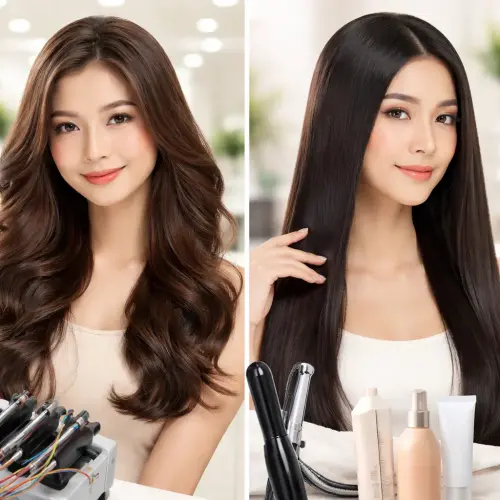
What Is the Core Difference Between Digital Perm and Rebond?
The difference between digital perm and rebond lies in their end goal. A digital perm uses controlled heat to reshape the hair into soft, defined curls or waves. Rebonding, on the other hand, breaks and reforms the hair’s disulfide bonds to make it completely straight. Both are semi-permanent chemical processes, but they target opposite textures.
Think of it this way: if you naturally have wavy or curly hair and want sleek straight strands, you choose rebonding. If you have straight or slightly wavy hair and want lasting volume and movement, you go for a digital perm. Your hair type and desired silhouette are the deciding factors.
How the Digital Perm Process Works
The digital perm is a modern take on the classic perm. Instead of cold rollers, your stylist uses a specially designed digital perm machine with heated rods. The process goes like this:
Step 1: Consultation and Hair Assessment
Your stylist evaluates your hair’s porosity, elasticity, and natural texture. Not every head of hair is a good candidate — very fine or over-processed hair may be at risk for breakage.
Step 2: Wrapping with Hot Rods
Small to medium sections of hair are wrapped around temperature-controlled rods. The heat settings are adjusted based on your hair thickness and the desired wave pattern.
Step 3: Chemical Application
A waving lotion is applied to soften the hair’s bonds. The heat from the rods then sets the new curl shape. After a predetermined time, a neutralizer locks the curls in place.
Step 4: Rinsing and Styling
The rods are removed carefully, and the hair is rinsed with lukewarm water. A leave-in conditioner or curl-enhancing product is applied. You leave the salon with bouncy, heat-set waves that last 4 to 8 months.
How the Rebonding Process Works
Rebonding, also known as Japanese hair straightening or thermal reconditioning, aims to permanently flatten the hair shaft. Here’s the typical procedure:
Step 1: Strand Test and Conditioning
A small section is tested for chemical tolerance. The hair is then washed with a clarifying shampoo to remove product buildup.
Step 2: Relaxer Application
A strong alkaline cream is combed through each section. This chemical breaks the disulfide bonds that give hair its natural curl or wave.
Step 3: Flat Ironing
The relaxed hair is straightened section by section with a flat iron set between 180°C and 200°C. This step physically re-aligns the hair into a straight configuration.
Step 4: Neutralizing and Sealing
A neutralizing solution is applied to reform the bonds in their new straight shape. The hair is then rinsed and often given a deep-conditioning mask. Results last until new growth appears, typically 6 to 12 months.
Comparing Results: Curls vs Straightness
The most obvious difference between digital perm and rebond is the final look. A digital perm produces curls or waves that start from the mid-lengths and ends, giving a voluminous, natural appearance. Rebonding yields a sleek, poker-straight finish that can look dramatic on naturally curly hair.
Which One Looks More Natural?
Digital perms tend to look more organic because the wave pattern follows the hair’s natural growth direction. Rebonded hair can sometimes appear overly stiff or flat, especially if the hair is very coarse or thick.
Which Lasts Longer?
Rebonding generally lasts longer — up to a year — but only until roots grow out. Digital perms weaken gradually over 4 to 6 months. Touch-ups are needed sooner for the perm.
Maintenance and Aftercare: Key Differences
Neither treatment is low-maintenance. Here’s how they compare:
| Factor | Digital Perm | Rebonding |
|---|---|---|
| Washing frequency | 2–3 times per week max | Every 2–3 days |
| Products needed | Moisturizing shampoo, curl cream, leave-in | Sulfate-free shampoo, smoothing serum, heat protectant |
| Heat styling | Avoid flat irons; diffuser OK | Flat iron touch-ups every 1–2 weeks |
| Humidity sensitivity | Curls hold well in damp air | Frizz can occur; anti-humidity products help |
| Touch-up timing | Every 4–6 months | Every 6–12 months (roots only) |
Cost Comparison: Which Treatment Is More Expensive?
Prices vary widely by salon, location, and hair length. On average, a digital perm ranges from $120 to $250. Rebonding typically costs $150 to $350. The higher end for rebonding reflects the intensive labour and strong chemicals involved. Expect to pay more for long or thick hair, as both treatments require more product and time.
Which One Poses More Damage?
Both treatments alter the hair’s structure, but the type of damage differs. The digital perm uses less aggressive chemicals but relies on heat, which can dry out hair if done too often. Rebonding uses stronger relaxers that can cause breakage, especially on previously coloured or bleached hair.
To minimize risk, always go to an experienced stylist and never double-process your hair (e.g., rebonding after bleaching). Healthy virgin hair yields the best results for both treatments.
Who Should Choose Digital Perm — and Who Should Choose Rebond?
Use this quick guide:
| Your Goal | Recommended Treatment |
|---|---|
| Soft, voluminous waves | digital perm |
| Pin-straight, sleek hair | Rebonding |
| Low heat styling routine | digital perm (no ironing needed) |
| Minimal root maintenance | Rebonding (touch-ups spread further) |
| Natural-looking texture | digital perm |
| Dramatic transformation | Rebonding |
Final Recommendation: Which Should You Get?
If you love volume, movement, and a softer aesthetic, the digital perm vs rebond choice leans toward the perm. If you crave flat, glossy, and unshakeably straight hair — especially if your natural texture is curly — rebonding is your match. Talk to a professional stylist and bring reference photos. A good consultation will factor in your hair condition, lifestyle, and budget.
Whichever you choose, commit to the aftercare routine. That’s what makes the difference between a beautiful result and a regret.
Useful Resources
Learn more about hair chemistry and salon treatments from reliable sources:
- Healthline: Chemical Hair Straightening Safety and Risks — a medical perspective on relaxers and straightening chemicals.
- Allure: What to Know Before Getting a Digital Perm — a beauty editor’s guide to the process, cost, and aftercare.
Frequently Asked Questions About digital perm vs rebond
Can I get both a digital perm and rebonding on the same hair?
No. Doing both would severely damage your hair. They alter bonds in opposite directions — the result would be breakage and uneven texture.
Which treatment is safer for colored hair?
Neither is completely safe for chemically colored hair. Digital perm is slightly less damaging, but you should wait at least 2 weeks after coloring. Rebonding on colored hair increases breakage risk significantly.
How long does a digital perm appointment take?
Expect 2 to 4 hours depending on hair length and thickness. The wrapping and heating stages take the longest.
How long does a rebonding session take?
Rebonding takes 3 to 6 hours. The relaxing, flat-ironing, and neutralizing steps are time-intensive.
Can I swim after a digital perm or rebonding ?
Wait at least 72 hours before swimming. Chlorine and saltwater weaken the fresh bonds and may alter the result.
Do digital perms work on short hair?
Yes, but the wave pattern may be tighter. Hair should be at least 5 inches long to wrap around the rods properly.
Does rebonding work on very curly hair?
Yes, rebonding was originally developed for coarse, curly Asian hair. It can straighten tight curls, but multiple sessions may be needed for resistant texture.
Will a digital perm damage my hair forever?
No. The curls fade as new hair grows, and the chemically treated section can be trimmed away over 6–12 months. Damage is not permanent if you care for your hair.
Can I dye my hair after rebonding ?
Wait at least 2 weeks. Use ammonia-free dye to minimize further chemical stress. Always strand-test first.
Does digital perm smell bad?
The waving lotion has a strong sulfur odor, similar to a classic perm. The smell usually fades within a few washes.
Which treatment is better for thin hair?
Digital perm adds volume and body, making it the better choice for thin hair. Rebonding can make thin hair look flat and limp.
Can rebonding fix frizz?
Yes, rebonding eliminates frizz by sealing the cuticle and aligning the hair shaft. However, new regrowth will still be frizzy if your natural texture is wavy or curly.
Is a digital perm suitable for men?
Absolutely. Many men get digital perms for a textured, voluminous look, especially for medium-length hair.
Does rebonding work on bleached hair?
Bleached hair is highly porous and fragile. Rebonding is not recommended — the hair may break off during the relaxing or ironing stage.
How often should I wash perm hair?
Wash 2–3 times per week using a sulfate-free, moisturizing shampoo. Over-washing can strip the curls of their shape.
Can I use a flat iron on perm hair?
It’s best to avoid flat irons on perm hair because they can relax the curls. If you need to smooth a section, use a low-heat setting.
Will rebonding grow out naturally?
Yes. As your hair grows, the natural texture returns at the roots. You’ll need root touch-ups every 6 to 12 months to maintain the straight look.
Which treatment is more expensive in the long run?
Digital perm may cost less per session but requires more frequent appointments. Rebonding is pricier upfront but lasts longer before needing touch-ups.
Can I sleep with wet hair after a perm?
No. Sleeping on wet perm hair can flatten the curls. Use a silk pillowcase and let hair dry completely before sleeping.
Does rebonding require a lot of daily maintenance?
Yes. You need to sleep with hair wrapped or braided, use a smoothing serum, and avoid excessive sweating because sweat can cause frizz.