
face-framing hairstyles that create a softer appearance Key Takeaways
Before we jump into the specific cuts, let’s talk about what actually gives a hairstyle that gentle, romantic feel.
- The best face-framing hairstyles that create a softer appearance use lightweight layers and gentle angles rather than blunt cuts.
- Curtain bangs, soft waves, and feathered ends are the top techniques for achieving a softer look on any face shape.
- Asking your stylist for "soft face-framing layers" is the easiest way to get a customized, low-maintenance result.
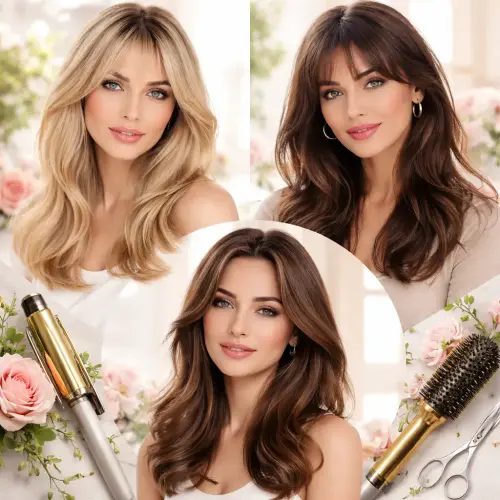
What Makes a Hairstyle Look Softer?
Before we jump into the specific cuts, let’s talk about what actually gives a hairstyle that gentle, romantic feel. The secret isn’t one single technique—it’s a combination of three elements: movement, texture, and the way the hair meets your face.
Blunt lines and heavy one-length cuts can emphasize angular features, especially around the jaw or cheekbones. On the flip side, face-framing hairstyles that create a softer appearance use graduated layers that skim the skin without cutting into it. These layers reflect light differently, creating an automatic blurring effect that makes features look less sharp.
The Role of Texture in Softening
Adding waves or bends to your hair—whether natural or with a curling iron—breaks up the visual line of a haircut. Even a layered cut looks softer when the ends have a slight curve rather than a dead-straight edge. Many women find that a soft face-framing layers approach works better than heavy bangs because it can be tailored to any length.
Why Face Shape Matters
It’s not about hiding your face but about balancing it. A square face benefits from wispy layers that start below the cheekbones, while a round face needs longer pieces that create vertical lines. The cuts in this guide are all adaptable, so you can bring the general idea to your stylist and tweak it from there.
7 Face-Framing Hairstyles That Create a Softer Appearance
Here are seven styles that consistently deliver that airy, soft effect. Each one includes the best face shape match and a quick styling tip.
1. Curtain Bangs with Long Layers
Curtain bangs parted down the middle create an inverted-V shape that widens narrow foreheads and softens strong brows. The key is to keep them light—your stylist should point-cut the ends rather than cutting straight across. This style works beautifully on oval, heart, and square faces. For a related guide, see Trendy Hair Transformations: 5 Smart Styles for Young Professionals.
Styling tip: Blow-dry the bangs away from your face using a round brush, then let them fall naturally. The slight bend at the ends is what creates that soft drape.
2. Face-Framing Layers on Medium Hair
Think of this as the classic “butterfly cut” for medium lengths. The shortest layer starts around the cheekbone and cascades down toward the collarbone. This adds volume around the temples and lifts the eyes. It’s a top choice among softer appearance hairstyles because it removes weight without losing length.
Best for: Round, oval, and diamond face shapes.
3. Long, Feathered Ends with a Soft Wave
If you grow your hair long and keep it all one length, it can drag your features downward. Feathered ends lighten the perimeter and create that flowing, airy look. Ask for “point-cut” or “snipped” ends rather than a blunt scissor cut. Adding a loose wave with a 1-inch curling iron takes this from pretty to stunning.
4. Wispy Pixie with Side-Swept Bangs
Short hair can still be soft. A pixie cut with longer pieces on top and side-swept bangs breaks up the roundness of the head shape. The wispy texture prevents it from looking severe. This is a great option for women with fine hair who want volume without bulk.
5. Soft Bob with Face-Framing Angles
A graduated bob that is longer in the front and shorter in the back can be very softening—if the angles are right. The front pieces should graze the jawline but not sit exactly on it. Instead, they should taper just past the jaw, creating a diagonal line that elongates the neck. This works particularly well on square and heart-shaped faces.
6. Shag with Curtain Bangs and Layers
The modern shag is all about texture and movement. Layers start at the cheekbone or even higher, with curtain bangs blending into the top layers. This cut adds volume at the crown and softens any area where you feel too angular. It’s forgiving on aging features because it draws the eye upward.
7. Long Layered Hair with a Center Part
Center parts are back, and they work best when paired with layers that start just below the chin. The layers frame both sides evenly, which visually narrows a wide forehead or broad cheeks. For the softest effect, add subtle highlights around the face—the interplay of light and shadow enhances the softness.
How to Ask Your Stylist for Face-Framing Layers for Soft Look
Communication is everything. Don’t just say “I want something soft.” Be specific. Here are exact phrases to use at your next appointment.
- “I’d like face-framing layers for soft look—starting around my cheekbones and feathering toward the ends.”
- “Can you add curtain bangs that blend into my face layers? I want them light and not too heavy.”
- “Please point-cut the ends instead of a blunt cut. I want movement.”
- “Keep the longest layer at my collarbone so I can still tie it back.”
If you’re not sure what to ask for, show a photo from this list. Visual references almost always get better results than verbal descriptions.
Face Shape and Layer Placement Guide
| Face Shape | Best Layer Starting Point | Avoid |
|---|---|---|
| Oval | Cheekbones or mid-section | Heavy blunt bangs (can hide balanced features) |
| Round | Below the chin (to add length) | Layers starting at the ears (adds width) |
| Square | Below the jawline | Layers that fall exactly on the jaw (accentuates angles) |
| Heart | Cheekbones or forehead area | Super short bangs (emphasizes narrow chin) |
| Diamond | Cheekbones or above the ears | Long layers with no volume at crown |
| Oblong | Cheekbones and sides | Very long layers with no angle |
This isn’t a strict rulebook—your stylist can adjust based on your hair density and personal preference. But it’s a solid starting point for creating face-framing hairstyles that create a softer appearance on almost any head shape.
Final Styling Tips for a Softer Look
Even the best cut can look flat if you don’t style it right. Here are a few finishing tricks that amp up the softness factor.
- Use a light mousse on damp hair. It adds volume at the roots without weighing down the layers.
- Dry with a diffuser. This enhances natural wave and prevents the hair from looking stringy.
- Don’t over-brush. Once your hair is dry, use a wide-tooth comb or your fingers to break up the curls. Over-brushing can create frizz and ruin the soft texture.
- Finish with a texturizing spray. A small amount of sea-salt spray or dry texture spray gives the ends piece-y separation, which looks softer than solid lumps of hair.
Remember, softer appearance isn’t about being perfect—it’s about looking effortless. A few slightly imperfect waves are more flattering than a helmet of perfectly curled hair.
Useful Resources
For more inspiration and expert advice on face-framing hairstyles that create a softer appearance, check out these reliable sources.
- The Hairstyler’s Guide to Face-Framing Layers — A comprehensive breakdown of how different layers work on various face shapes.
- InStyle’s Best Face-Framing Layers for Every Length — Photos and styling tips from professional stylists.
Frequently Asked Questions About face-framing hairstyles that create a softer appearance
What are face-framing hairstyles that create a softer appearance?
These are haircuts that use strategic layering—usually starting around the cheekbones, jaw, or chin—to reduce harsh lines and add movement around the face. They often include curtain bangs, feathered ends, or soft waves.
Do face-framing layers work on straight hair?
Yes. In fact, straight hair often shows the shape of the layers more clearly. The key is to ask for point-cut or razor-cut ends so the hair doesn’t appear heavy. You can still add a slight bend with a flat iron to soften the line further.
Can I get a softer look with short hair?
Absolutely. A wispy pixie, a soft bob with angled layers, or a side-swept lob all create a softer effect. The trick is to avoid blunt cut lines and keep the texture piece-y and light.
What face shape looks best with curtain bangs?
Curtain bangs are very versatile. They work particularly well on oval, heart, and square faces because they visually widen a narrow forehead or soften a broad one.
How often do I need a trim to maintain face-framing layers?
Every 6 to 8 weeks is ideal. The layers around your face grow out faster than the rest of your hair, and a refresh keeps the shape from getting heavy or losing its soft effect. For a related guide, see Soft Layered Haircuts: 7 Best Looks for Every Face Shape.
Will face-framing layers make my hair look thinner?
For most hair types, no. The layers remove bulk from the ends, which can actually make hair look lighter and bouncier. If you have very fine hair, ask for longer, gentle layers so you don’t lose too much density.
Can I achieve a softer look without cutting my hair?
Yes, with styling tricks. You can use a large curling wand to create soft waves that curve away from your face, or try a side part instead of a center part. However, a cut gives you the most change with the least daily effort.
What is the difference between face-framing layers and regular layers?
Regular layers are distributed throughout the head to reduce weight and add volume. Face-framing layers specifically target the hair that falls around your face—usually starting at the cheekbones or jaw—to draw attention to your best features.
Are soft face-framing layers suitable for curly hair?
Definitely. Curls naturally create movement, and carefully placed layers can reduce bulk in the triangle shape that happens when curly hair is left all one length. Ask your stylist for dry-cutting techniques specific to curly textures.
How do I style face-framing layers at home?
Blow-dry with a round brush to guide the layers away from your face. Use a curling iron on 1-inch sections, alternating the direction of the curl for a natural finish. Finish with a light hold spray.
Do face-framing hairstyles work for older women?
Yes, they are often recommended for mature faces because soft layers draw attention upward and away from sagging around the jawline. Adding highlights around the face also creates a lifting effect.
What is the best length for a soft face-framing bob?
A chin-to-shoulder length is ideal. The front pieces should be slightly longer than the back, and the ends should be textured so they don’t look heavy.
Can I get face-framing layers if I have thick hair?
Yes, but your stylist may need to remove some bulk from the interior layers so the face-framing pieces don’t look too chunky. Internal texturizing techniques help keep the shape light.
Are face-framing hairstyles high maintenance?
Not necessarily. While you need regular trims, daily styling is often easier than with one-length hair because the layers help the hair fall into a better shape on their own.
What should I avoid when asking for a soft look?
Avoid blunt lines, heavy hair product, and over-styling. Also, avoid showing your stylist a photo of a cut that has sharp angles—even if they soften it, you may end up with something too structured.
Will long face-framing layers hide my double chin?
They can help. Layers that start below the chin and fall forward create a vertical line that can visually slim the jaw area. A side part also helps break up the horizontal width.
Can I wear my hair up with face-framing layers?
Yes, especially if you request longer face-framing pieces. When you pull your hair back, those pieces can be left out to soften the look. A low ponytail or messy bun works perfectly.
What tools do I need to style face-framing layers?
A round brush, a blow-dryer with a concentrator nozzle, a curling wand (1 to 1.5 inches), and a texturizing spray. That’s enough to create both loose waves and a smooth blowout.
How do I know if a face-framing cut is right for me?
It’s almost always a safe bet because it can be customized to any face shape or hair type. The worst that happens is you get a few pieces that don’t quite work—but those grow out in a few weeks. There’s no big regret like with a full bang or a dramatic chop.
What is the difference between a shag cut and face-framing layers?
A shag has more layers throughout the entire head, often with a lot of texture and a ’70s-inspired shape. Face-framing layers focus only on the hair around your face. They can be added to almost any base haircut, including a shag. For a related guide, see 7 Modern Bang Styles Inspired by Korean Beauty Trends.