
balayage vs ombre Key Takeaways
Balayage and ombre are two wildly popular hair color techniques, but they create totally different vibes.
- Balayage vs ombre is mainly a contrast and maintenance debate — balayage is softer and lower-maintenance, ombre is bolder but needs more upkeep.
- Balayage uses a hand-painted technique for a natural, blended look; ombre uses a horizontal sectioning method for a dramatic line of demarcation.
- Your hair type, texture, and color goals are the deciding factors — fine hair often suits balayage better, while thicker hair can handle ombre’s intensity.
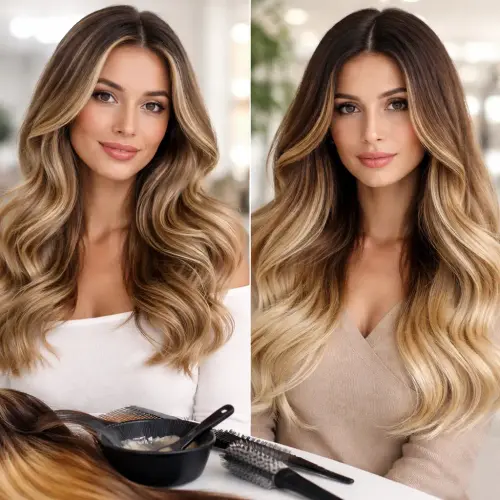
What Readers Should Know About the Balayage vs Ombre Debate
If you’ve been scrolling through hair inspiration on Pinterest or Instagram, you’ve definitely seen both balayage vs ombre looks. They’re easy to confuse because both involve lighter ends, but the hair color technique difference is significant. Balayage is French for “sweeping” — colorists hand-paint highlights onto the surface of your hair for a soft, multidimensional effect. Ombre, which means “shaded” in French, creates a distinct gradient from dark roots to light tips, often with a more obvious transition line.
The biggest factor in the balayage vs ombre decision is your personal style. Do you want a “I just got back from the beach” glow? Go balayage. Prefer a bold, edgy statement that screams “I spent hours at the salon”? Ombre might be your match. But there’s more to consider — maintenance, hair health, and how each technique works with your natural color.
The Key Balayage vs Ombre Comparison Table
Before diving into pros and cons, here’s a quick side-by-side of the two techniques so you can spot the hair color technique difference at a glance.
| Feature | Balayage | Ombre Hair Color |
|---|---|---|
| Application method | Hand-painted, freehand | Sectioned, often foiled or brushed |
| Transition look | Soft, blended, natural | Dramatic, defined gradient |
| Contrast level | Subtle to medium | High contrast |
| Grow-out phase | Very natural, no harsh lines | Noticeable roots, needs touch-ups |
| Maintenance frequency | Every 8–12 weeks | Every 4–8 weeks |
| Best for hair type | Fine to medium, straight to wavy | Thick, coarse, curly, or straight |
| Damage level | Lower (less bleach contact) | Moderate (more product, longer processing) |
| Cost per session | $150–$300 | $100–$250 |
Balayage Technique — Pros and Cons
The balayage technique is beloved for its effortless, lived-in look. Here’s what you need to know before booking an appointment.
Pros of Balayage
- Low maintenance — because the color is painted on the surface, regrowth blends in naturally. You can go 3–4 months between touch-ups, which saves time and money.
- Less damaging — the balayage technique uses less bleach and processes each section individually, so you avoid the harsh chemical overload of full foils.
- Customizable — your colorist can create anything from a soft honey glow to caramel ribbons. The hand-painted method means every head is unique.
- Works with grays — if you’re starting to go gray, balayage can help blend them in without a stark root line.
- Flattering on most skin tones — the soft, sun-kissed effect complements warm, cool, and neutral undertones.
Cons of Balayage
- Subtlety might not be bold enough — if you want a dramatic transformation, balayage can feel too gentle.
- Not ideal for very dark hair in one session — achieving a big lift from black or very dark brown may require multiple appointments.
- Requires a skilled colorist — the freehand technique takes practice, so you need to find someone experienced with balayage vs ombre applications.
- Can look uneven if done poorly — if your colorist applies too much or too little, you might end up with patchy highlights.
- Less predictable — because it’s hand-painted, results vary more than a foiled ombre.
Ombre Hair Color — Pros and Cons
Ombre hair color is for those who want a distinctive, fashion-forward two-tone effect. Here’s the full breakdown.
Pros of Ombre
- High impact — the dramatic fade from dark to light makes a strong style statement. It’s perfect for someone who wants their hair to be the center of attention.
- Works on all hair lengths — while balayage shines on mid-length and long hair, ombre looks amazing on short bobs and even pixie cuts.
- Easier to do at home — with box kits, the sectioned approach is more beginner-friendly than the freehand balayage technique.
- Great for curly and thick hair — the distinct gradient shows up beautifully on textured hair, and the ends can pop with color.
- Can be used for fashion colors — pastel pink, blue, or purple ombre is a popular choice for creative expressions.
Cons of Ombre
- High maintenance — the root line grows out noticeably, so you’ll likely need touch-ups every 4–8 weeks to keep it looking intentional.
- More damage — achieving the dramatic light-to-dark gradient often requires bleaching the ends multiple times, which can lead to dryness and breakage.
- Less natural — if you’re going for a “no-makeup makeup” hair vibe, ombre can look too artificial for your taste.
- Can look dated — the early 2010s ombre trend has faded, and some stylists now see it as less trendy compared to balayage.
- Not ideal for very fine hair — the line of demarcation can make thin hair look even sparser if the color is too stark.
Which Hair Color Is Better for Your Hair Type and Maintenance Preferences?
So, which hair color is better for you? Let’s break it down by hair type and lifestyle.
Fine or Thin Hair
Balayage is the safer bet. The soft, blended highlights create the illusion of volume and dimension without harsh lines that can make fine hair look sparse. Ombre hair color, if done with too much contrast, can emphasize thinness. If you still want ombre, ask your colorist for a soft, subtle gradient with just a few shades of lift.
Thick or Coarse Hair
You can rock either technique, but ombre really shines here. Thick hair holds the gradient beautifully, and the pronounced transition can highlight your hair’s natural texture. Balayage also works, but you may need more sessions to get enough brightness through dense strands.
Curly or Coily Hair
Both techniques work, but with caveats. Balayage on curly hair gives a lovely, dimensional sun-kissed effect that mimics natural highlights. Ombre hair color on curls can be stunning, but the gradient line may look uneven due to curl shrinkage — a skilled stylist knows how to place the color to account for that.
Low-Maintenance Lifestyle
Choose balayage. The grow-out is so forgiving that you can stretch appointments to 12 weeks or more. Balayage vs ombre for lazy hair days? Balayage wins every time.
Bold, High-Impact Style
If you love changing up your look and don’t mind regular salon visits, go for ombre hair color. The contrast is eye-catching and you can even play with fashion colors on the ends.
Decision Checklist: Balayage or Ombre?
Run through this checklist to decide once and for all between balayage vs ombre.
- Do you want a natural, sun-kissed look? → Balayage
- Do you want a dramatic, two-tone effect? → Ombre
- Do you hate frequent salon visits? → Balayage
- Do you enjoy changing your hair often? → Ombre
- Is your hair fine or thin? → Balayage
- Is your hair thick or coarse? → Either (ask your stylist)
- Do you want to hide gray roots? → Balayage
- Do you want to try fashion colors on ends? → Ombre
- Are you on a tight budget for upkeep? → Balayage (fewer touch-ups)
- Do you like a low-commitment start? → Start with balayage, it’s easier to grow out
Useful Resources
Looking for more expert advice on balayage vs ombre? Check out these resources from trusted industry sources:
- Allure: Balayage vs Ombre — The Real Difference Explained — A clear breakdown of application methods and results from beauty editors.
- Byrdie: Balayage vs Ombre — Which Hair Color Technique Should You Try? — Pros, cons, and expert tips to help you decide.
Frequently Asked Questions About balayage vs ombre
What is the main difference between balayage and ombre?
The main hair color technique difference is that balayage uses hand-painted highlights for a blended, natural look, while ombre creates a more defined gradient from dark roots to lighter ends.
Which lasts longer: balayage or ombre?
Balayage lasts longer between touch-ups because the regrowth blends naturally — typically 8–12 weeks. Ombre needs touch-ups every 4–8 weeks to maintain the sharp contrast.
Is balayage less damaging than ombre?
Yes, the balayage technique is generally less damaging because it uses less bleach and often skips foils, processing each section individually.
Can you do balayage on dark hair?
Yes, balayage works beautifully on dark hair, but achieving a big lift from black or very dark brown may require a couple of sessions.
Can you do ombre on dark hair?
Absolutely — in fact, ombre hair color is especially striking on dark hair because the contrast between dark roots and light ends is more pronounced.
Which is more expensive: balayage or ombre?
Balayage typically costs more per session ($150–$300) because of the skilled freehand application, but you need fewer visits. Ombre costs $100–$250 per session but requires more frequent touch-ups.
Does balayage work on curly hair?
Yes, balayage is excellent for curly hair because the hand-painted highlights follow the natural curl pattern, creating a soft, dimensional effect.
Does ombre work on curly hair?
Yes, but it’s trickier. A skilled colorist must account for curl shrinkage to place the gradient correctly so it doesn’t look uneven.
Which technique is better for fine hair?
Balayage is generally recommended for fine hair because it adds dimension and volume without harsh lines that can make thin hair look sparser.
Which technique is better for thick hair?
Both work well, but ombre often showcases thick hair’s volume and texture better due to the dramatic gradient.
Can I switch from ombre to balayage?
Yes, but it takes time. Your stylist will need to blend the harsh line of demarcation into a softer balayage, often over two or three sessions.
Can I switch from balayage to ombre?
Yes, it’s easier to go from balayage to ombre. Your stylist can darken the roots and lighten the ends to create a more defined gradient.
Does balayage look natural?
Yes, the balayage technique is designed to mimic the sun’s natural highlighting effect, so it’s one of the most natural-looking hair color options.
Does ombre look natural?
Ombre looks less natural because of its intentional two-tone contrast, but it can be subtle if you choose a soft gradient with just a few shades of lift.
Can I do balayage or ombre at home?
Ombre is easier to DIY with box kits because it’s sectioned. Balayage requires more skill and is best left to professionals unless you have experience.
How long does a balayage appointment take?
A balayage session typically takes 2–3 hours, depending on length and thickness.
How long does an ombre appointment take?
Ombre appointments average 2–4 hours because of the bleaching and toning steps needed to achieve the gradient.
Which technique is better for hiding gray roots?
Balayage is better for blending grays because the hand-painted highlights soften the root area, making regrowth less noticeable.
Can I get both balayage and ombre in one look?
Yes, some stylists combine techniques — they might balayage the top for softness and then create an ombre effect on the ends for contrast.
Does balayage require bleach?
Most balayage lifts require bleach, but because it’s painted on the surface, less bleach is used compared to other highlight techniques.